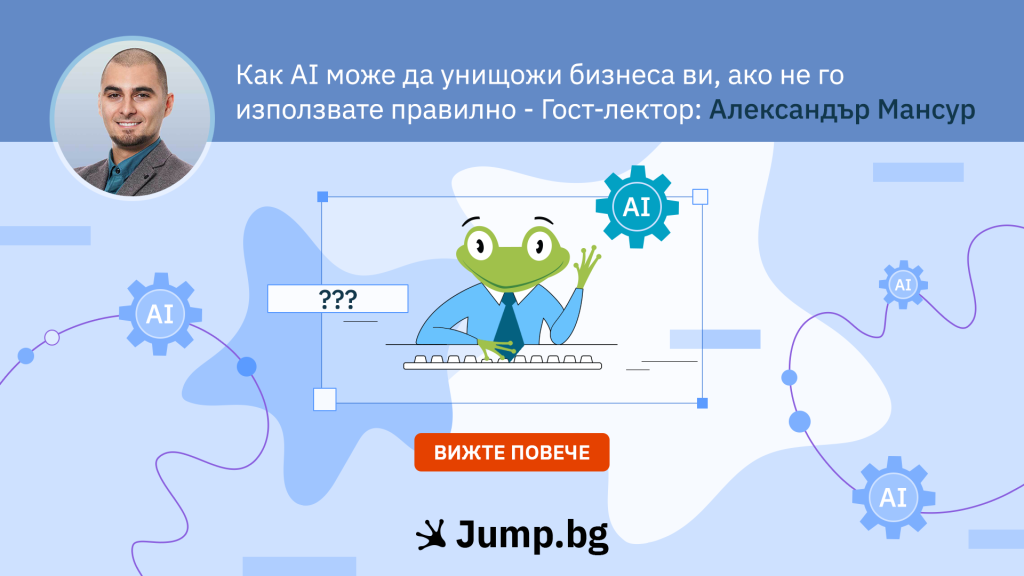
What are the most common mistakes made by business owners when it comes to AI, and how can they be prevented? We discuss this with Alexander Mansour — a well-known figure in digital marketing with many years of experience. Alexander is a business owner, digital agency founder and trusted consultant. In recent years he has focused on AI integration in business processes and harnessing its full potential for digital marketing. We pass the baton to Alexander, who shares his expert perspective on the topic.
The AI hype is growing! Everywhere you turn, some "guru" is explaining how artificial intelligence will fix your life, your business and even your relationships. But while some people are genuinely making money with it, the majority of businesses are currently not using its full potential. And the result is not "digital transformation" — it is a sure path to bankruptcy or a negative impact on the company's image.
As someone who does this professionally, I often see two scenarios: some churn out spam by the kilo, while others miss golden opportunities because they can't be bothered to learn. And at the heart of any tool — regardless of what it is — the most important thing is to use it correctly, with clear goals and direction.
Part 1: A Guide to "How to Make a Fool of Yourself"
1. How AI-Generated Content Kills Brand Trust
You scroll through Facebook or Instagram and it hits you: "Unlock your potential with our immersive and innovative solutions at the cutting edge of technological evolution." Nobody in real life talks like that. Bulgarian consumers are cynical. We have a built-in "nonsense" radar. When you run an ad with text that sounds like a bad Google Translate result, you are telling the customer: "I don't care enough to hire a copywriter, so I had ChatGPT write something in five seconds." People are not that naïve. They feel the lack of empathy and humanity. And they punish you — either with indifference or with comments like "What a stupid AI slop."
AI-generated ad copy is recognisable when the user hasn't done their "homework" — providing the AI with additional information about the brand's tone of voice, form of address, and removing clichés and long dashes (which AI tends to overuse).
2. Visual Kitsch and People With Six Fingers
We all know those banners. Overly shiny, plastic faces, some unnatural lighting and... right there in the corner, a hand with six fingers holding a cup upside down. Using Midjourney or DALL-E is not as simple as typing "wife working at laptop." It requires judgement. When your business floods the feed with cheap images screaming "I WAS GENERATED!", you devalue your brand. You look cheap. And cheap doesn't sell expensive services.
All marketing professionals will tell you the same timeless truth: the importance of positioning your company through brand design, elements and messages. Cheap, quickly generated images will affect exactly that — your positioning and recognisability.
3. The Big Mistake: "I'm Firing Marketing — I Have ChatGPT"
This is the fastest way to crash. Business owners think they are saving a salary by having the secretary "generate content." AI is a tool, not an expert. It is like having a Ferrari in the garage — if you hand the keys to someone who has only ever ridden a bicycle, they will hit the first tree. ChatGPT has no soul, no context — it does not understand humour, current news and events, cultural nuances or local idioms. Without a good marketing specialist managing the tool, the content becomes sterile, soulless and fragmented rather than part of a coherent strategy.
Part 2: The Real Benefits of AI That Most Businesses Are Missing
1. Heavy Lifting on Autopilot
Instead of wondering how to write the next LinkedIn post, think about your processes. Contracts and proposals: why are your people wasting hours writing standard documents? AI can generate (from scratch or from a template) contracts, proposals, presentations and more in seconds — if properly trained with your templates. Not just another ChatGPT prompt, but a mini-software solution (vibe-coding) that works with a single click.
Onboarding: how long does it take you to onboard a new client? Hours, right? Instead of manually writing emails, attaching documents and questionnaires, distributing tasks across the team and more manual work, an automated process can do everything in under 30 seconds. In our agency, that is exactly how we do it.
Analysis: got 10,000 rows in Google Sheets with sales, customer and product data? AI will surface correlations you would never spot with the naked eye.
2. Training — Where Almost Everyone Falls Short
Most people think working with AI is easy — you type something and you're done. Yes, but not quite. Your results are poor because your prompts are poor. If you type "write me an ad for trainers" in ChatGPT, you will get garbage. If you do not invest time in training your team how to "speak" to these models, how to give them context, style and constraints, you will always be one step behind.
The investment is not in the $20-a-month subscription. The investment is in the heads of the people using it. That is why we created the AI Marketing course and the full-day AI masterclasses at Riscase Academy. Every day we help businesses train their teams to work correctly — so that AI helps them rather than hinders them.
Conclusion
AI will not take your job in the near future. It will be taken by the competitor who uses AI more smartly than you. I recommend thinking about how to stay two steps ahead. Technology is a brutal amplifier. If your processes are chaotic, you will get automated chaos. If you are creative and skilled at what you do, you will become super-productive.
So please — stop with the plastic banners and boring copy. Use AI to free up time for what truly matters: being human and communicating with your clients as human beings. AI is a tool, not a saviour of businesses — with it you can improve, upgrade and optimise if you know how to use it. I am extremely grateful to everyone who has read this article and to Jump.BG for giving me the opportunity to share my perspective with their audience.