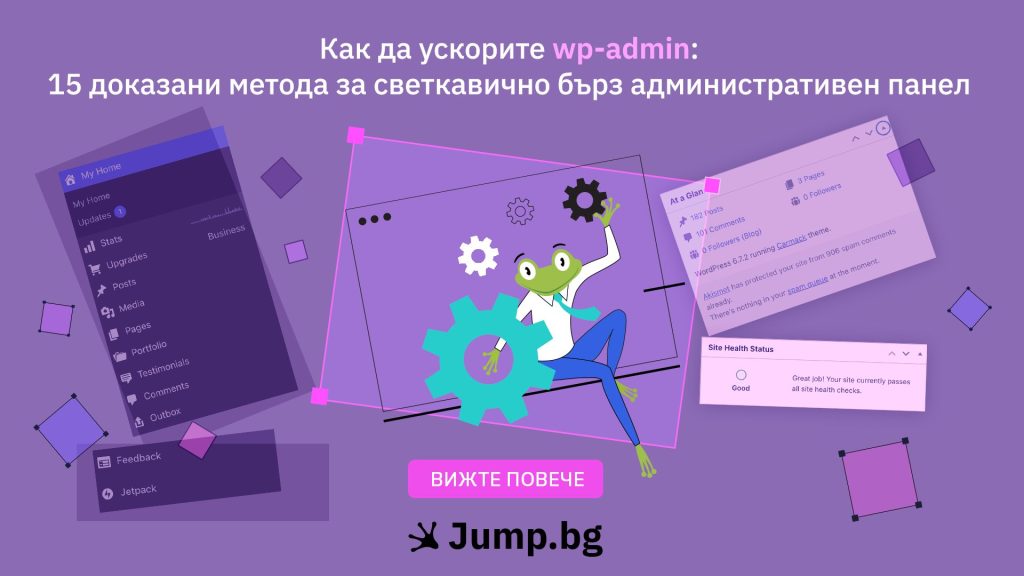
A fast WordPress dashboard is critical for smooth user operations and efficient website management. When your WP-admin is slow, it hampers productivity, frustrates users and may signal deeper problems with your site. This guide covers 15 proven methods for speeding up WP-admin in WordPress — from optimising plugins and managing server resources to implementing performance improvement techniques.
Why Is Your WP-Admin Slow?
A slow WP-admin can be caused by several common problems: outdated infrastructure (older versions of WordPress, themes or plugins without modern performance improvements); heavy plugins (resource-intensive or poorly coded plugins that significantly slow down the site); low-quality hosting (insufficient resources from a poor hosting provider); database bloat (accumulated unnecessary data such as post revisions, spam comments and transient options); and inefficient server settings.
Impact of a Slow Admin Panel
A slow WordPress admin panel has far-reaching consequences — significant delays in performing basic tasks such as updates, content creation, editing and plugin management; difficulty responding quickly to issues on the site; and compromised security and reliability. Ensuring a fast and responsive admin panel is critical for maintaining an efficient, secure and effective online presence.
How to Fix a Slow WordPress Dashboard
1. Update PHP Version
PHP is the server-side scripting language that powers WordPress. Newer PHP versions offer better performance, improved memory management and enhanced security features, making them vital for fast and secure admin operation. Check your current PHP version in cPanel → Select PHP Version and update to the latest supported version. Verify plugin and theme compatibility before updating, then test your site carefully afterwards.
2. Update WordPress Version
Keeping WordPress up to date is the most important step from a performance and security perspective. Every new version typically includes performance improvements, bug fixes and security patches. Update to the latest version and ensure your themes and plugins are also current.
3. Audit Your Theme and Remove Admin Bloat
Some themes load unnecessary scripts and styles in the admin area. Use a plugin like "Disable Admin Notices" or a code snippet to prevent frontend theme assets from loading in the backend. Also disable admin notices from plugins you do not actively use.
4. Replace Memory-Hungry Plugins
Identify plugins that consume excessive memory using a plugin like Query Monitor or P3 Profiler. Replace inefficient plugins with lighter alternatives. Deactivate and delete plugins you no longer use — inactive plugins still take up space and can slow database queries.
5. Increase PHP Memory Limit and Server RAM
WordPress defaults to a 256MB memory limit, which may be insufficient for complex setups. Increase the memory limit by adding define('WP_MEMORY_LIMIT', '512M'); to wp-config.php. For server-level RAM, contact your hosting provider or upgrade your hosting plan.
6. Enable Persistent Object Cache and OPcache
Object caching stores database query results in memory (Redis or Memcached), dramatically reducing repeated database calls. OPcache compiles and caches PHP code, eliminating the need to reparse scripts on every request. Both are typically configurable from your hosting control panel or by contacting your host.
7. Increase Heartbeat API Intervals and Limit Autosave/Revisions
WordPress Heartbeat API makes frequent AJAX calls to the server (every 15-60 seconds by default), which can create load. Use a plugin like "Heartbeat Control" to reduce the frequency. Also limit post revisions in wp-config.php: define('WP_POST_REVISIONS', 5);
8. Clean Up the Database
Over time the database accumulates post revisions, auto-drafts, trashed content, spam comments, orphaned metadata and expired transients. Use a plugin like WP-Optimize or Advanced Database Cleaner to remove this bloat. Always back up the database before running cleanup operations.
9. Consider LiteSpeed Cache and CDN
If your hosting supports LiteSpeed, the LiteSpeed Cache plugin provides server-level caching that is significantly more efficient than PHP-based cache plugins. A CDN (Content Delivery Network) offloads static assets to geographically distributed servers, reducing load on your origin server and speeding up both frontend and backend response times.
10. Investigate and Improve TTFB (Time to First Byte)
TTFB is the time between a browser request and the first byte of data received from the server. A high TTFB (over 600ms) typically indicates a server-side performance issue. Use tools like Google PageSpeed Insights or WebPageTest to measure it, then address the root cause — often PHP performance, database queries or hosting quality.
11. Replace WP-Cron With a Real Cron Job
WordPress's built-in wp-cron runs on page load, adding overhead to every request. Replace it with a real server-level cron job: disable wp-cron in wp-config.php with define('DISABLE_WP_CRON', true); and set up a cron job via cPanel to run wp cron event run --due-now every 5 minutes.
12. Clear Transients
Transients are temporary cached data stored in the database. Expired transients accumulate and slow down database queries. Use a plugin like Transients Manager or WP-Optimize to find and delete expired transients.
13. Disable Unused Dashboard Widgets
The WordPress dashboard loads several widgets by default — some of which make external API calls (like the "WordPress Events and News" widget). Disable widgets you do not use via Screen Options in the top right corner of the Dashboard page.
14. Limit External HTTP Requests
Some plugins make external HTTP requests during admin page loads, adding latency. Use Query Monitor to identify them. Consider blocking all external HTTP requests and whitelisting only those you need: define('WP_HTTP_BLOCK_EXTERNAL', true); in wp-config.php.
15. Choose Better Hosting
If you have applied all the above optimisations and WP-admin is still slow, the bottleneck may be your hosting itself. Switch to a hosting provider that uses LiteSpeed, NVMe SSD storage, PHP 8.x, object caching and a modern server stack. Jump.BG WordPress Hosting uses LiteSpeed Webserver with optimised CPU allocation, Imunify360 security and easy ModSecurity integration, ensuring your admin panel loads as fast as possible.
Conclusion
A slow WP-admin is not something you have to accept. By systematically working through these 15 methods — from updating PHP and WordPress to cleaning up your database and upgrading your hosting — you can achieve a noticeably faster and more responsive WordPress dashboard. Start with the quick wins (PHP update, database cleanup, Heartbeat control) and work your way through the more involved optimisations for maximum impact.