Creating a website today is easier than ever, but choosing the right platform remains an important decision. Two of the most popular options are Wix and WordPress. Both allow users to build professional websites, but they differ significantly in terms of flexibility, customization, ease of use, and long-term growth potential.
Understanding these differences will help you choose the platform that best aligns with your goals, budget, and technical experience.
Key Takeaway:
Wix and WordPress are two popular website-building platforms, but they are designed for different users and business needs. Wix offers an easy-to-use solution that simplifies website creation, hosting, and maintenance. WordPress provides significantly more flexibility, customization options, and scalability, making it a preferred choice for businesses with long-term growth plans. The right platform depends on your budget, technical skills, and the level of control you want over your website.
Key Differences Between Wix and WordPress
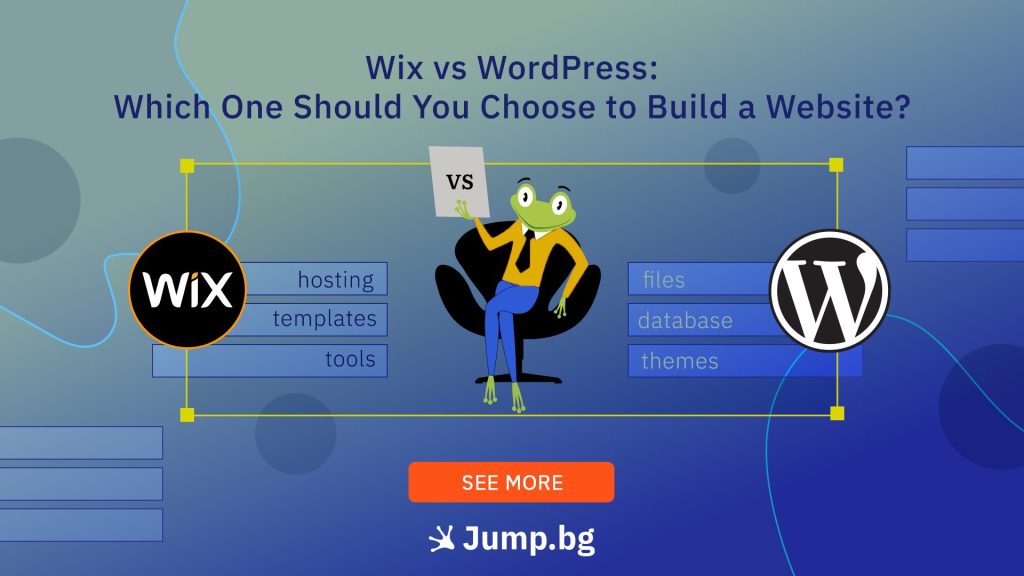
Wix is a hosted platform designed with ease of use in mind. It provides everything needed to build a website in a single package, including hosting, templates, security, and management tools. Users can create pages through a visual drag-and-drop editor without any coding knowledge.
One of Wix’s defining characteristics is that the website operates entirely within the platform’s infrastructure. Unlike WordPress, where website owners have access to files and databases and can move their website to another hosting provider at any time, Wix websites remain tied to the platform and cannot be fully migrated to another hosting environment. This simplifies management but limits migration options and control over the technical environment.
WordPress, more specifically WordPress.org, is an open-source content management system (CMS). It provides complete control over a website but requires separate hosting and domain registration.
Many website owners choose specialized WordPress hosting optimized for performance, security, automatic updates, and easier management. Although WordPress may initially appear more complex, it offers significantly greater customization possibilities.
Ease of Use and Initial Setup
Wix is designed to guide users through the entire website creation process. After selecting a template, users can easily modify layouts, images, colors, and content through a visual editor. Most tasks can be completed without technical knowledge.
With WordPress, several additional steps are required. You need to choose a hosting provider, install WordPress, and configure a theme and plugins. While many hosting companies offer one-click installation, the platform still requires a better understanding of how websites are managed.
Once users become familiar with WordPress, working with it becomes significantly easier. The administrative dashboard is relatively intuitive, but managing plugins, updates, backups, and security settings requires ongoing attention.
For people looking for the fastest and easiest way to launch a website, Wix often has the advantage.
Design Flexibility and Customization
Wix offers hundreds of professionally designed templates for different industries and website types. Its drag-and-drop editor provides considerable control over layouts and visual elements, making it easy to create an attractive website even without design experience.
Choosing a template is an important decision early in the project because, once a website is published, switching to a different template usually requires rebuilding content and design elements. This makes planning your website structure and visual identity especially important from the start. By comparison, changing themes in WordPress is generally easier, although additional adjustments may sometimes be required.
However, WordPress offers much broader customization capabilities. Thousands of free and premium themes are available, and users can modify virtually every aspect of their website. Developers also have access to the source code and can create fully custom functionality.
WordPress also features a massive plugin ecosystem that extends functionality far beyond what most website builders can offer. Whether you need membership systems, online courses, advanced forms, or integrations with external platforms, WordPress generally provides more options.
For simpler websites, Wix's tools are often more than sufficient. For more complex projects, WordPress offers significantly greater freedom.
SEO and Marketing Capabilities
Over the past several years, Wix has made significant improvements to its SEO capabilities. Users can edit page titles, meta descriptions, URLs, image alt text, and other important SEO elements. The platform also provides built-in guidance for beginners.
WordPress is widely recognized as one of the most flexible platforms for SEO. Popular plugins such as Yoast SEO and Rank Math allow users to manage technical SEO settings, generate XML sitemaps, optimize content structure, and improve on-page optimization.
Beyond SEO, WordPress integrates with a broader range of marketing tools. Businesses can easily connect analytics platforms, email marketing systems, CRM solutions, and conversion optimization tools.
Although both platforms can achieve strong SEO results, WordPress generally provides more opportunities for companies that rely on long-term organic growth.
Pricing and Ongoing Costs
The cost of a website can vary significantly depending on the platform, required functionality, and future growth plans.
- Wix subscription plans typically start at €10–15 per month and can exceed €100 per month, depending on the features included, storage capacity, and ecommerce functionality.
- Wix uses a subscription-based model that combines hosting, security, maintenance, and management tools into a single service. At the time of writing, paid plans start at approximately USD 17 per month and reach up to USD 159 per month for the Business Elite plan. Pricing varies depending on country, selected plan, and billing period. This makes costs relatively predictable and easier to budget for.
- Domain registration is often included for the first year with some Wix premium plans, while renewals typically cost between €10 and €25 per year.
- WordPress itself is free, but website owners must purchase the necessary services and tools separately.
- WordPress hosting typically costs between €3 and €30+ per month, depending on the hosting plan and website requirements.
- A domain name for a WordPress website generally costs between €10 and €25 per year.
- Premium WordPress themes often cost €30-€100+ as a one-time purchase, while paid plugins can range from €20 to several hundred euros per year.
- Development and customization costs can be minimal if you build the website yourself, but they can increase significantly when custom development or integrations are required.
- Wix offers more predictable monthly expenses because most services are included within a single subscription.
- WordPress often delivers better long-term value when more advanced functionality and greater development flexibility are required.
The total cost depends on the website’s goals, required features, and the level of future customization.
Scalability and Long-Term Growth
Wix is a suitable choice for personal websites, portfolio sites, local business websites, and many small to medium-sized projects. Its managed environment reduces administrative tasks and simplifies maintenance.
WordPress stands out when scalability becomes a priority. The platform powers everything from personal blogs to large corporate websites with millions of monthly visitors. Companies can continuously add new functionality, expand their content, integrate external systems, and customize their websites without the limitations of a closed ecosystem.
As a business grows, WordPress generally provides more opportunities for adaptation and expansion. This flexibility is one of the main reasons why it remains one of the most widely used website-building platforms in the world.
Companies planning significant growth, advanced functionality, or major content expansion often find that WordPress is the better long-term solution.
Conclusion
Wix is an excellent choice for individuals, small businesses, and organizations looking for an easy way to create and manage a website with minimal technical involvement. Its all-in-one approach simplifies website creation, hosting, maintenance, and security, allowing businesses to launch quickly without specialized expertise.
WordPress is better suited for users who want greater flexibility, customization, and control over their website’s future development. Its extensive ecosystem of themes, plugins, and development options makes it particularly attractive for businesses, content creators, and organizations with more specialized requirements or long-term growth plans.
Regardless of which platform you choose, reliable hosting remains a key factor in website performance, security, and long-term stability.
At Jump.BG, we provide hosting solutions for websites of all sizes, whether they use WordPress or another open-source platform. Our services include high-performance infrastructure, LiteSpeed technology, free SSL certificates, DDoS protection, automatic backups, and the resources needed to keep your website secure and fast.
If you are planning to build a new website or move an existing one to a new hosting provider, our team can help you choose the most suitable solution for your specific needs. Contact us at 02 428 8888 or sales@jump.bg for more information.