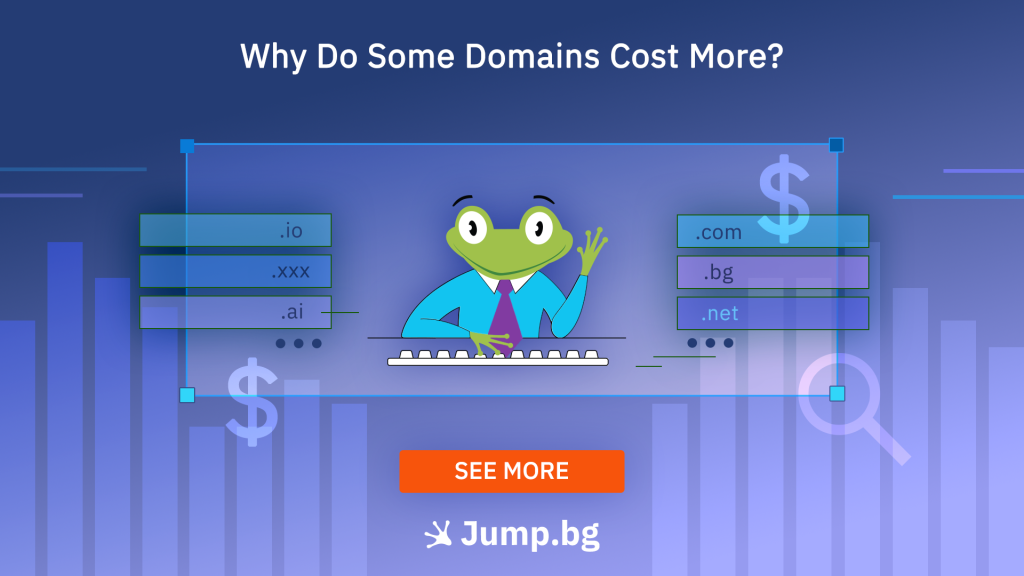
Buying a domain name is usually one of the first steps when setting up a website, but the pricing can be surprisingly complex. Some names are inexpensive and easy to register, while others carry significantly higher costs that aren’t immediately obvious.
That difference often leads to a basic question: why are some domain names priced so much higher than others?
In this article, we will look at what drives domain pricing, why certain names are considered more valuable than others, and how these differences show up in both standard registration and the wider market.
Key Takeaway:
Domain prices vary based on extension type, market demand, brandability, SEO history, and ownership status. Registries and registrars price standard registrations, while aftermarket domains are valued based on competition and perceived business use. Understanding these factors helps determine whether a domain’s price reflects its actual value or is driven by market forces.
How Domain Pricing Actually Works Across the Internet
No single organization controls domain pricing. Instead, it operates through several layers, each playing a different role in how it is priced and sold.
At the base level are registries, which manage domain extensions such as .com, .net, and .io. They set the wholesale price for each extension, which acts as the starting cost. Registrars then purchase these domains and resell them to users, adding their own pricing, service fees, and occasional promotions. This is why the same extension can cost slightly different amounts depending on the provider.
There is also a separate layer beyond standard domain registration. The domain marketplace is where already-registered names are bought and sold between owners. In this space, pricing is not fixed but shaped by market activity, negotiation, and perceived value.
Together, these layers form the system behind pricing and explain why similar domain names can end up with very different price points.
The Role of Domain Extensions in Pricing Differences
One of the main factors that influences domain pricing is the extension itself. The most widely used extension, .com, tends to carry higher value due to its global recognition, long history, and the way users naturally associate it with standard websites. This consistent preference keeps demand high, which in turn affects its pricing compared to other extensions.
Extensions like .net and .org are generally positioned slightly lower, while newer options such as .tech, .store, or .online are often cheaper to register. However, some modern extensions, including .io and .ai, have seen increased pricing due to strong adoption in tech and startup environments. In addition, certain registry operators classify specific names within an extension as premium, which can significantly increase costs even at the registration stage.
Why Demand and Industry Competition Drive Higher Prices
Demand plays a major role in how domain names are priced, especially in highly competitive industries. When multiple businesses target the same type of name, prices tend to rise quickly because availability is limited and demand is concentrated around similar keywords.
This is most visible in sectors like finance, insurance, real estate, and technology, where domain names containing terms such as “loans,” “insurance,” or “crypto” are closely tied to commercial activity. In these cases, it is not only a web address but also a competitive asset linked to visibility and credibility, which naturally drives higher market prices.
Brandability and the Value of Strong Domain Names
Beyond keywords and industry relevance, brandability is another key factor that shapes pricing. A domain does not need to describe a product or service to hold value. What matters is how easily it can be remembered, pronounced, and adapted into a brand identity.
Short names, single-word domains, and clean, natural-sounding combinations tend to be priced higher because they are easier to recognize and share. These domains give businesses greater flexibility to build their identity from the ground up, reduce reliance on keyword-based naming, and enhance their overall market appeal.
The Impact of the Domain Aftermarket and Resale Ecosystem
A large share of high-value domain sales comes from the aftermarket, where domains are traded after their initial registration. This includes activity by investors, auction platforms, and private sellers, where pricing is not tied to fixed registration fees but is shaped by market activity and negotiations between buyers and sellers.
In this environment, domains can change hands at much higher prices if demand increases over time. Practices such as domain flipping, where names are bought with the intention of reselling them at a profit, are common. Expired domains also play a role in this market, often attracting buyers for their established history, traffic potential, or SEO advantages.
SEO Value, Domain Age, and Historical Authority
Search engine optimization can influence domain value through the history it carries. Older domains are often more valuable because they may already have established backlinks, indexed pages, and a track record of appearing in search results. These signals show search engines that the domain has a proven track record, since search engines tend to trust domains with consistent, long-term activity more than newly registered ones.
This is especially important for expired domains that still retain strong SEO profiles. If a domain previously hosted legitimate content and attracted high-quality backlinks, it can retain some of that authority even after ownership changes. As a result, buyers sometimes pay more for it due to its existing search strength, not because of the name itself, but because it may reduce the time required to build search visibility, depending on the domain's history and usage.
Why Scarcity Makes Premium Domains More Expensive
Domain names are inherently limited because each one is unique. Once a name is registered, it cannot be created again in the same form, which means supply is permanently fixed while demand can continue to grow. This structural limitation naturally creates scarcity across the entire domain system.
When a domain is already owned, anyone interested in it has to negotiate with the current holder rather than register it directly. This often drives prices higher, especially for short, generic, or highly brandable names with broad appeal. As competition for these limited options increases, market value tends to rise simply because there are fewer alternatives with comparable appeal or usability.
How to Evaluate Whether a Domain Is Expensive or Worth the Price
When choosing a domain, to evaluate whether a domain is fairly priced or overpriced, it helps to break the decision into specific factors rather than looking at the price alone:
- Pricing source (registration vs. aftermarket): Check whether the domain is sold at the standard registration price or through the secondary market. Aftermarket listings are usually higher due to prior ownership and negotiation-based pricing.
- Brand potential: Assess whether the name is short, memorable, and flexible enough to support a brand. Strong brand potential can justify higher pricing even without keyword relevance.
- Domain extension: Compare the extension used. Established extensions like .com are typically valued higher than newer or less common alternatives, depending on market preference.
- SEO and historical profile: Review whether the domain has existing backlinks, indexed history, or prior usage. These signals can add value beyond the name itself.
- Industry demand: Consider how competitive the niche is. Domains tied to high-demand industries are often priced higher due to stronger buyer interest.
Taken together, these factors help determine whether a domain’s price reflects practical value or is driven mainly by speculation and market positioning.
Conclusion
Domain prices vary widely because they are shaped by multiple forces operating simultaneously. Technical structures like registration systems, market-driven factors such as demand, and qualitative elements like branding potential, SEO history, and scarcity all contribute to the final cost. Understanding these combined factors helps explain the wide range of domain prices.
In practice, a domain’s value reflects its usefulness and competitiveness in the digital market. Some carry higher prices because they are in demand, others because they offer strong branding potential or solid SEO history, and many because they are simply no longer available through standard registration. Taken together, these factors position domain names as more than digital addresses, not just digital addresses, but assets influenced by real market conditions and long-term online value.
At Jump.bg, our domain service is designed to fit within how the domain system actually works, where pricing and availability depend on extensions, registration rules, and market structure. We offer a wide range of domain options combined with hosting tools, making it easier to register and manage everything in one place.

![[Updated] Urgent PHP Fix: Two Critical Vulnerabilities, Update Your Site](https://www.jump.bg/wordpress/wp-content/uploads/2026/10/PHP-Critical-Security-Release-October-2026-1-300x169.jpg)